Understanding Blocks, Transactions, and the Blockchain Ledger
Blockchain Fundamentals Weekly — Issue #3
In our previous article, we explored why blockchain was invented and how it introduced a new way to establish trust without relying entirely on centralized institutions.
Now it's time to examine what actually exists inside a blockchain.
When people hear the word blockchain, they often imagine an incredibly complicated technology hidden behind layers of cryptography and mathematics.
While blockchain systems are sophisticated, their basic structure is surprisingly intuitive.
At its core, a blockchain is simply a growing collection of transactions that are organized into blocks, with every block permanently connected to the ones before it.
Understanding these three building blocks—transactions, blocks, and the ledger—is essential before exploring consensus, mining, staking, or smart contracts.
Let's start with the smallest unit.
What Is a Transaction?
A transaction is a record that something happened.
The exact meaning depends on the blockchain being used.
For example, a transaction might represent:
- Sending cryptocurrency
- Updating ownership of an asset
- Executing a smart contract
- Recording a business event
- Registering a digital identity
- Verifying a document
A transaction is simply an instruction requesting that the blockchain update its shared ledger.
Think of it as filling out a form requesting a change to an official record.
The request is submitted first.
Only after verification does it become part of the permanent history.
What Information Does a Transaction Contain?
Although different blockchains store different data, most transactions include several common components.
Typically, a transaction contains:
- The sender
- The recipient
- The asset or information involved
- The amount or data being transferred
- A timestamp
- A digital signature
- Additional network-specific information
Together, these details allow the network to determine whether the transaction is valid.
Transactions Must Be Verified
Submitting a transaction does not automatically make it part of the blockchain.
First, the network verifies that it follows all protocol rules.
Depending on the blockchain, verification may include questions such as:
- Does the sender actually own the asset?
- Has the asset already been spent?
- Is the digital signature valid?
- Does the transaction follow network rules?
- Are sufficient transaction fees included?
Only transactions that successfully pass validation move forward.
Invalid transactions are rejected.
What Is a Block?
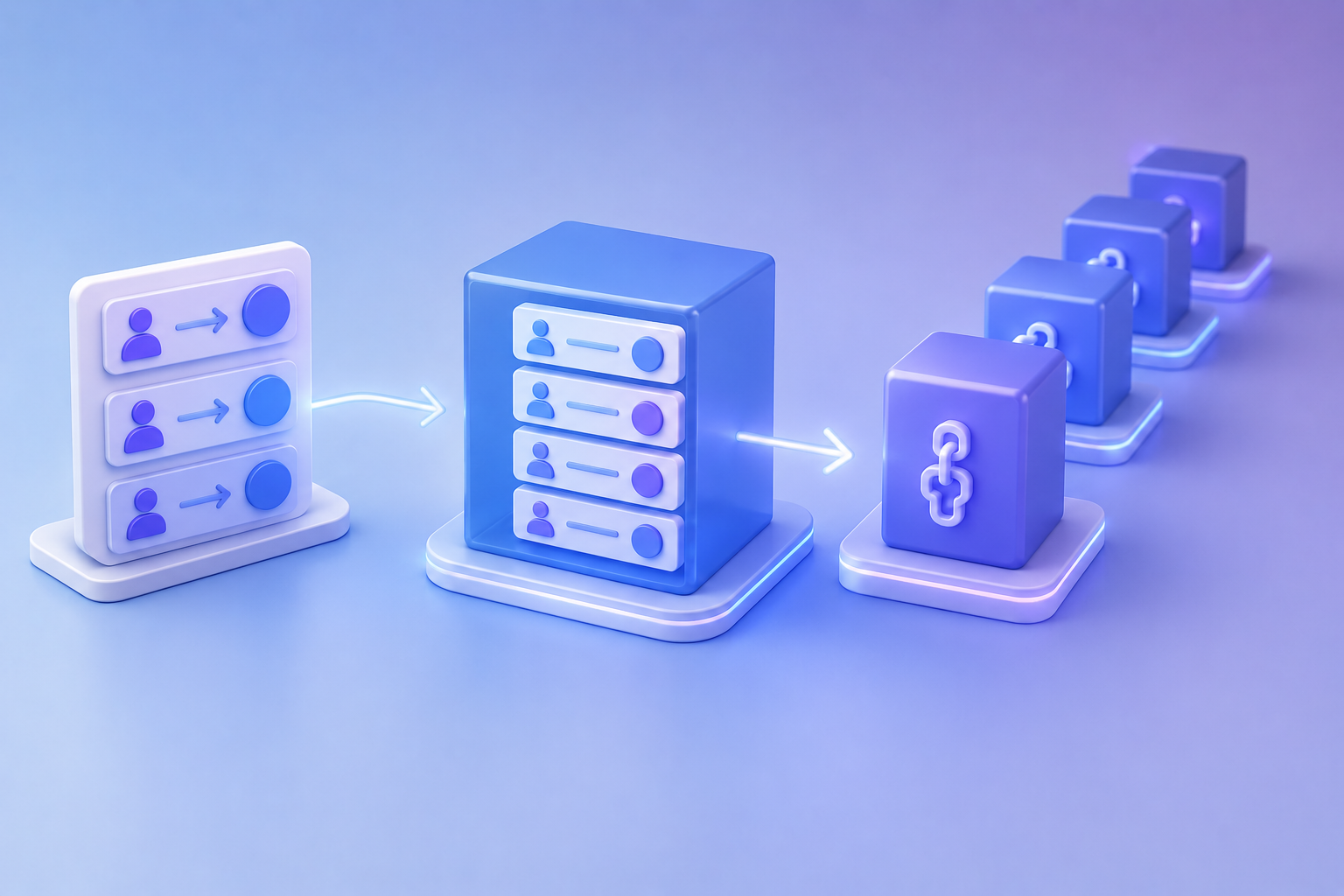
Once enough verified transactions have accumulated, they are grouped together into a block.
A block is simply a container.
Instead of storing one transaction at a time, blockchain networks efficiently package many verified transactions together.
You can think of a block as a page in an accounting ledger.
Rather than writing one entry per page, multiple related entries appear together before the page is finalized.
What's Inside a Block?
Although block structures vary between blockchain networks, a typical block contains:
- A list of verified transactions
- The block creation time
- A reference to the previous block
- A unique cryptographic hash
- Various metadata used by the network
The exact fields differ depending on the blockchain protocol, but the overall concept remains consistent.
Blocks organize verified information into permanent historical records.
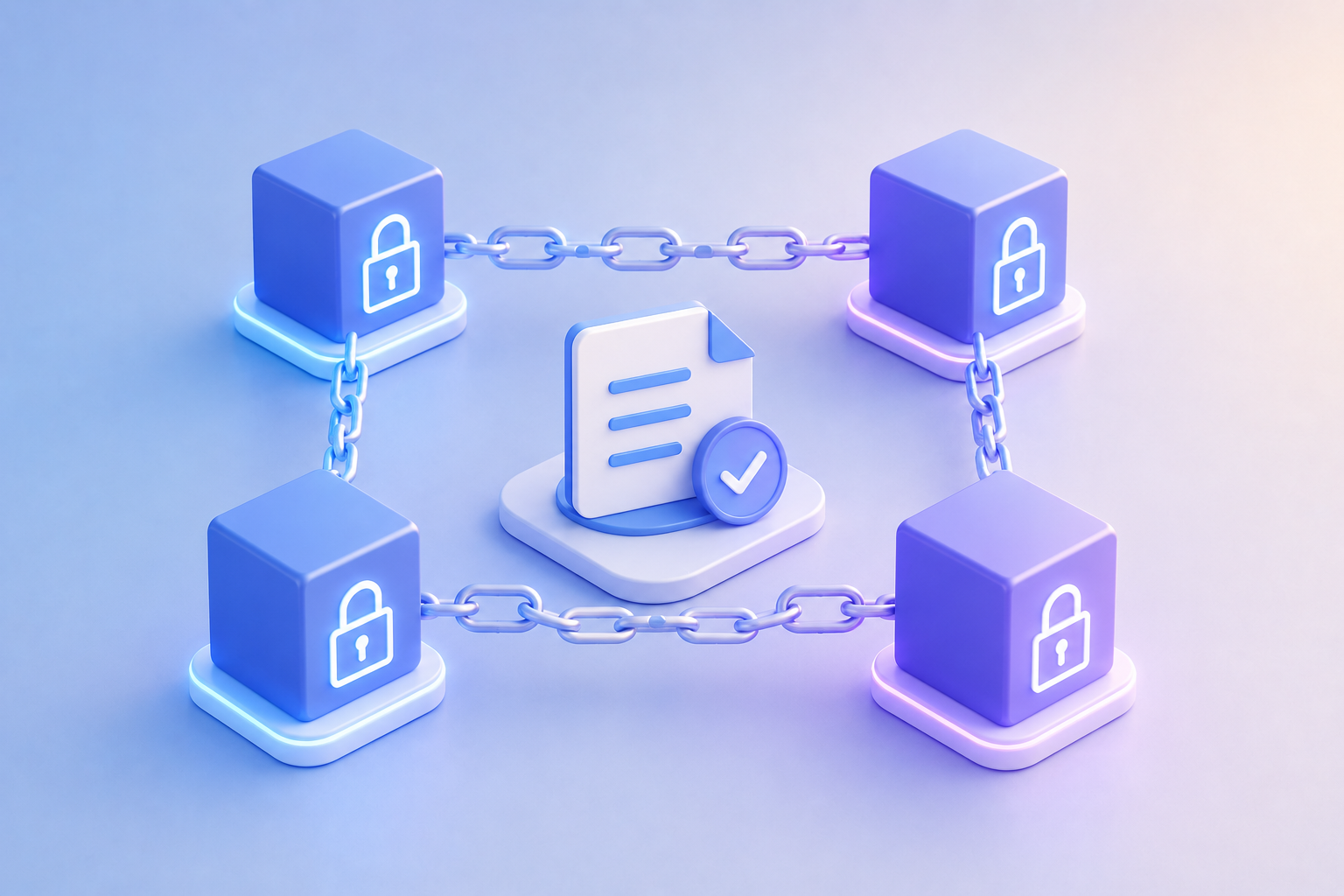
Linking Blocks Together
The word blockchain comes from the way blocks connect to one another.
Each block contains a cryptographic reference to the block immediately before it.
Visually, the structure looks something like this:
Genesis Block
      │
      ▼
 Block 1
      │
      ▼
 Block 2
      │
      ▼
 Block 3
      │
      ▼
 Block 4
Every new block extends the history of the ledger.
Instead of replacing older information, blockchain continually appends new records.
This creates a chronological timeline of everything that has happened.
What Is the Genesis Block?
Every blockchain begins with its very first block.
This is known as the Genesis Block.
Since no earlier block exists, the Genesis Block has no previous reference.
Every block created afterward builds upon it.
Although users rarely interact directly with the Genesis Block, it represents the starting point of the blockchain's history.
Understanding the Blockchain Ledger
The ledger is simply the complete collection of every confirmed block and transaction.
Imagine a giant accounting book.
Each page contains transactions.
Every completed page is permanently added to the end.
Nothing is removed.
Nothing is reordered.
New pages continue being added over time.
Blockchain works in a remarkably similar way.
The ledger continually grows as new blocks are confirmed.
Every Node Maintains a Copy
One of blockchain's defining characteristics is that the ledger is distributed.
Instead of existing on one central server, copies are maintained by many independent computers called nodes.
When a new block is accepted:
- Every participating node updates its ledger.
- Every node stores the same blockchain history.
- Every participant can independently verify records.
This shared history allows the network to operate without relying on a single database owner.
Why Linking Blocks Matters
Suppose someone wanted to secretly change a transaction that occurred years ago.
That single change would alter the block's cryptographic fingerprint.
Since every following block references the previous one, the modification would break the chain of references.
The attacker would then need to recreate every subsequent block while convincing the rest of the network to accept the altered history.
On well-secured blockchain networks, this is extraordinarily difficult.
This design helps protect the integrity of historical records.
Blockchain Is Append-Only
Traditional databases frequently allow records to be edited, deleted, or overwritten.
Blockchain follows a different philosophy.
New information is generally added rather than replacing existing history.
This is often described as an append-only ledger.
Rather than hiding changes, blockchain preserves historical records, making it easier to audit how the ledger evolved over time.
This characteristic is especially valuable in industries that require transparency and accountability.
Why This Structure Matters
Separately, transactions, blocks, and ledgers are relatively simple concepts.
Their real power comes from how they work together.
Transactions capture events.
Blocks organize verified transactions.
The ledger preserves the complete shared history.
Combined with cryptography and consensus mechanisms, this structure enables thousands of independent participants to maintain the same trustworthy record without relying on a central administrator.
It is this architecture—not any single component—that makes blockchain unique.
Key Takeaways
- A transaction records an event or requested change to the blockchain.
- Transactions are verified before becoming part of the ledger.
- Verified transactions are grouped into blocks.
- Every block references the previous block using cryptography.
- The Genesis Block is the first block in every blockchain.
- The blockchain ledger is the complete history of all confirmed blocks.
- Nodes maintain identical copies of the ledger across the network.
- Blockchain grows by appending new blocks rather than rewriting history.
Looking Ahead
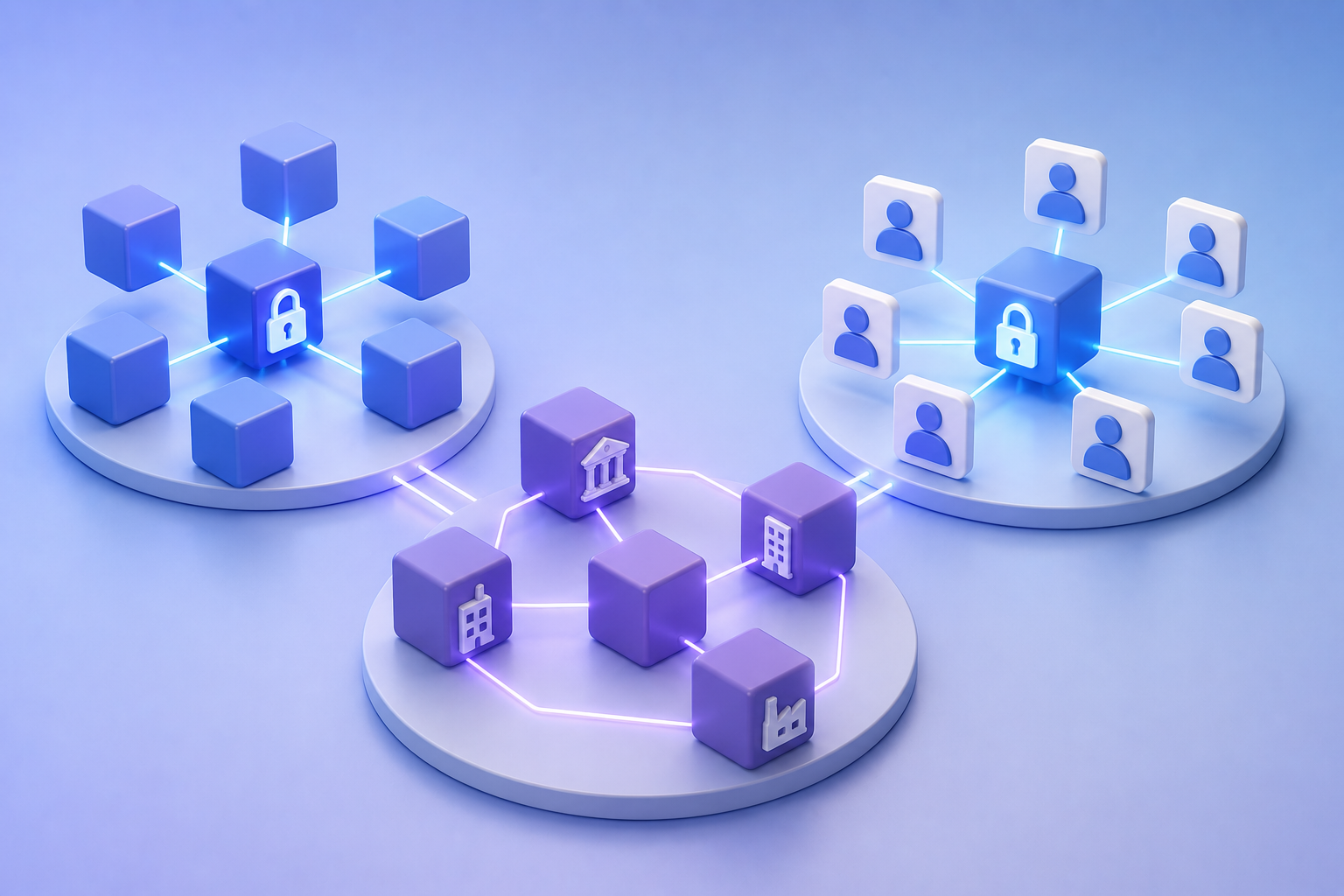
In our next issue, we'll explore Public vs. Private vs. Consortium Blockchains: What's the Difference? We'll compare the major blockchain network models, examine where each is used, and explain why different industries choose different approaches based on their security, governance, and operational requirements.