How Blockchain Achieves Consensus Without a Central Authority
Blockchain Fundamentals Weekly — Issue #5
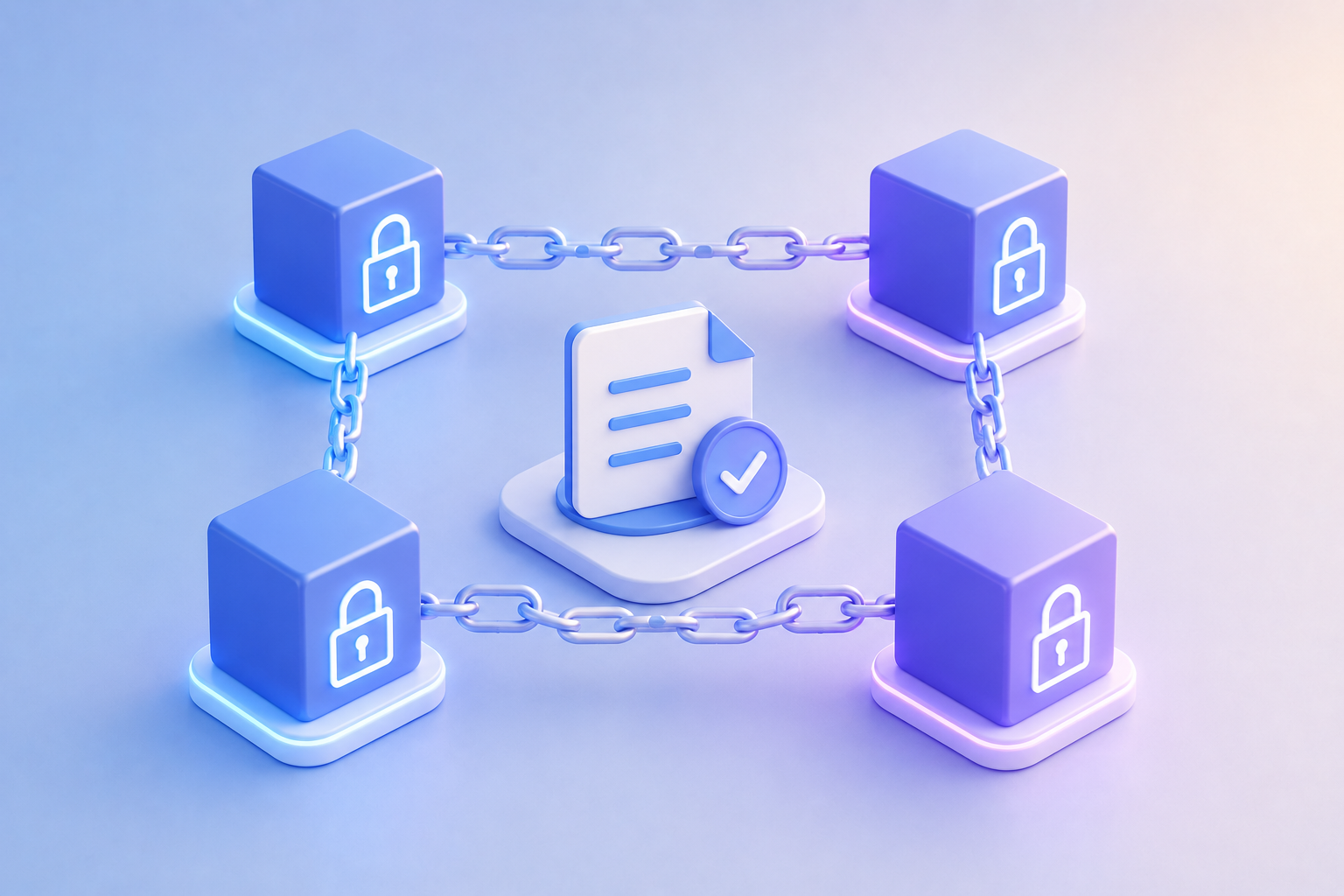
One of the most remarkable aspects of blockchain technology is that thousands—or even millions—of computers around the world can agree on the same version of history without a central authority.
There is no master server.
No global database administrator.
No single organization making the final decision.
Instead, blockchain networks rely on a process known as consensus.
Consensus is the mechanism that allows independent participants to agree on which transactions are valid and what the current state of the blockchain should be.
Without consensus, blockchain simply wouldn't work.
In this article, we'll explore what consensus is, why it's necessary, and how blockchain networks use it to maintain trust across decentralized systems.
What Is Consensus?
Consensus simply means agreement.
In everyday life, consensus happens constantly.
A group of friends chooses a restaurant.
A board votes on a business decision.
A jury reaches a verdict.
Everyone may begin with different opinions, but eventually the group agrees on one outcome.
Blockchain networks face a similar challenge.
Thousands of computers receive new transactions every second.
The network must determine:
- Which transactions are legitimate
- Which order they occurred in
- Which block should be added next
- Which version of the blockchain is correct
Consensus provides the answer.
Why Consensus Is Necessary
Imagine a blockchain with no consensus mechanism.
Computer A believes Transaction X happened first.
Computer B believes Transaction Y happened first.
Computer C rejects both.
Soon, every participant has a different version of the ledger.
The blockchain would become useless because no one could agree on reality.
Consensus ensures every honest participant eventually shares the same history.
The Challenge of Decentralization
In a traditional database, agreement is easy.
One server stores the official records.
Everyone trusts that server.
Blockchain removes that central authority.
Instead, thousands of independent computers—called nodes—must cooperate without necessarily trusting one another.
Some participants may:
- Lose internet connectivity
- Make mistakes
- Experience hardware failures
- Attempt malicious attacks
Consensus is designed to keep the network functioning despite these challenges.
Verifying Transactions
Before transactions become part of the blockchain, they must be checked.
Depending on the blockchain, the network verifies questions such as:
- Does the sender own the asset?
- Has it already been spent?
- Is the digital signature valid?
- Does the transaction follow protocol rules?
- Are the required fees included?
Only valid transactions move forward.
Consensus begins after this verification process.
Reaching Agreement
Once transactions have been verified, the network must decide which block becomes the next official block.
Rather than allowing every participant to add blocks whenever they wish, blockchain protocols establish clear rules.
These rules determine:
- Who may propose a block
- How blocks are validated
- When a block is accepted
- How disagreements are resolved
Every participant follows the same protocol.
Because everyone follows identical rules, the network gradually converges on one shared history.
Why Consensus Builds Trust
Consensus does not require participants to trust one another personally.
Instead, participants trust that:
- The protocol is transparent
- Cryptography is secure
- Honest participants follow the rules
- Invalid blocks will be rejected
This creates trust through verification rather than authority.
It is one of blockchain's defining innovations.
What Happens If Someone Cheats?
Suppose a malicious participant attempts to create a fraudulent transaction.
Perhaps they try to spend assets they do not own.
Or they alter historical records.
Honest participants independently verify every proposed block.
If a block violates the protocol, it is rejected.
The fraudulent information never becomes part of the accepted blockchain.
Consensus protects the integrity of the shared ledger.
Temporary Disagreements
Occasionally, different participants may temporarily disagree.
For example, two valid blocks might be proposed at nearly the same time.
For a short period, different parts of the network may see different versions of the blockchain.
Consensus protocols contain rules for resolving these situations.
Eventually, one version becomes the accepted history, and the network returns to a single shared ledger.
These temporary disagreements are a normal part of distributed systems.
Consensus Does Not Mean Voting
Many beginners imagine consensus as a simple majority vote.
In reality, blockchain consensus is much more sophisticated.
Different blockchain networks use different algorithms to determine agreement.
Some rely on computational work.
Others rely on economic incentives.
Some use permissioned voting systems among approved participants.
The exact mechanism depends on the blockchain's design goals.
Different Consensus Mechanisms
Over the years, researchers have developed many consensus algorithms.
Some of the most common include:
- Proof of Work (PoW)
- Proof of Stake (PoS)
- Practical Byzantine Fault Tolerance (PBFT)
- Delegated Proof of Stake (DPoS)
- Proof of Authority (PoA)
Each balances trade-offs involving:
- Security
- Performance
- Energy consumption
- Scalability
- Decentralization
No single consensus mechanism is perfect for every application.
Consensus Is About Reliability
Consensus is often misunderstood as simply choosing who creates the next block.
Its true purpose is much broader.
Consensus ensures the blockchain remains:
- Consistent
- Accurate
- Fault tolerant
- Resistant to malicious behavior
- Available despite failures
It enables independent participants to maintain one reliable record without relying on centralized control.
Why Consensus Matters
Consensus is the engine that keeps decentralized blockchains operating.
Without it, participants could never agree on ownership, transactions, or history.
Every blockchain—whether public, private, or consortium—depends on some form of consensus.
Although the algorithms differ, they all pursue the same objective:
Ensure every honest participant eventually agrees on one shared version of the truth.
Understanding consensus provides the foundation for studying blockchain security, mining, staking, and network governance.
Key Takeaways
- Consensus is the process that allows blockchain participants to agree on a shared ledger.
- It replaces the need for a central authority to validate transactions.
- Consensus ensures honest participants eventually share the same blockchain history.
- Transactions are verified before consensus determines which block becomes official.
- Consensus protocols help prevent fraud, double spending, and inconsistent records.
- Different blockchain networks use different consensus mechanisms depending on their goals.
- Consensus is fundamental to blockchain's ability to operate as a decentralized system.
Looking Ahead
In our next issue, we'll explore Cryptographic Hash Functions: The Foundation of Blockchain Security. You'll learn how a simple mathematical function helps protect data integrity, links blocks together, and makes blockchain records extraordinarily difficult to tamper with.