What Is Cloud Computing? A Complete Beginner's Guide
Cloud Fundamentals Weekly — Issue #1
In this issue: Learn what cloud computing is, why it transformed modern computing, how it works at a high level, and why understanding the cloud has become an essential technology skill.
Introduction
Cloud computing has fundamentally changed how the world builds, delivers, and consumes technology. Whether you're streaming a movie, collaborating on a document, training an artificial intelligence model, or backing up photos from your phone, cloud computing is working behind the scenes.
Today, organizations of every size—from startups to global enterprises—depend on cloud services to power websites, mobile applications, business operations, scientific research, healthcare systems, financial services, and countless other digital experiences.
Yet despite its widespread use, cloud computing is often misunderstood. Many people think the cloud is simply "the internet" or "someone else's computer." While these descriptions contain a small amount of truth, they fail to explain what makes cloud computing one of the most important technological innovations of the modern era.
This article introduces the fundamental concepts behind cloud computing and builds the foundation for understanding cloud architecture, cybersecurity, DevOps, artificial intelligence infrastructure, and modern software engineering.
What Is Cloud Computing?
Cloud computing is the on-demand delivery of computing resources over a network, typically the internet.
Rather than purchasing, maintaining, and operating their own physical infrastructure, organizations can access computing resources whenever they need them from specialized cloud providers.
These computing resources include:
- Virtual servers
- Data storage
- Networking
- Databases
- Software applications
- Artificial intelligence services
- Security services
- Analytics platforms
- Development tools
Instead of thinking about cloud computing as a specific technology, it's better to think of it as a service delivery model.
Organizations consume computing resources in much the same way they consume electricity or water—they use what they need and pay only for what they consume.
The Evolution of Computing
To understand why cloud computing became so revolutionary, it helps to understand how organizations traditionally operated their IT infrastructure.
Before cloud computing became mainstream, businesses typically built and managed their own data centers.
This required significant investments in:
- Physical servers
- Networking hardware
- Storage systems
- Backup infrastructure
- Cooling systems
- Power systems
- Security equipment
- Dedicated IT staff
If an organization needed more computing power, it often had to purchase additional hardware, wait for delivery, install equipment, configure systems, and integrate everything into the existing environment.
This process could take weeks or even months.
Much of that expensive hardware also remained underutilized because organizations had to purchase enough capacity for peak demand—even if those peaks occurred only a few times each year.
Cloud computing solved many of these challenges.
How Cloud Computing Works
At a high level, cloud providers operate enormous collections of data centers located around the world.
These facilities contain hundreds of thousands—or even millions—of servers connected by high-speed networking infrastructure.
Instead of customers purchasing individual servers, cloud providers divide these massive computing resources into services that customers can access over the internet.
When an organization needs additional computing power, it simply requests more resources.
Within minutes—or sometimes seconds—the required infrastructure becomes available.
When those resources are no longer needed, they can be released just as quickly.
This flexibility allows organizations to adapt rapidly as business requirements change.
The Core Characteristics of Cloud Computing
Modern cloud platforms share several defining characteristics.
On-Demand Self-Service
Users can provision computing resources whenever needed without requiring manual hardware installation or lengthy procurement processes.
This dramatically reduces the time required to launch new applications or services.
Broad Network Access
Cloud services are accessible through standard network connections.
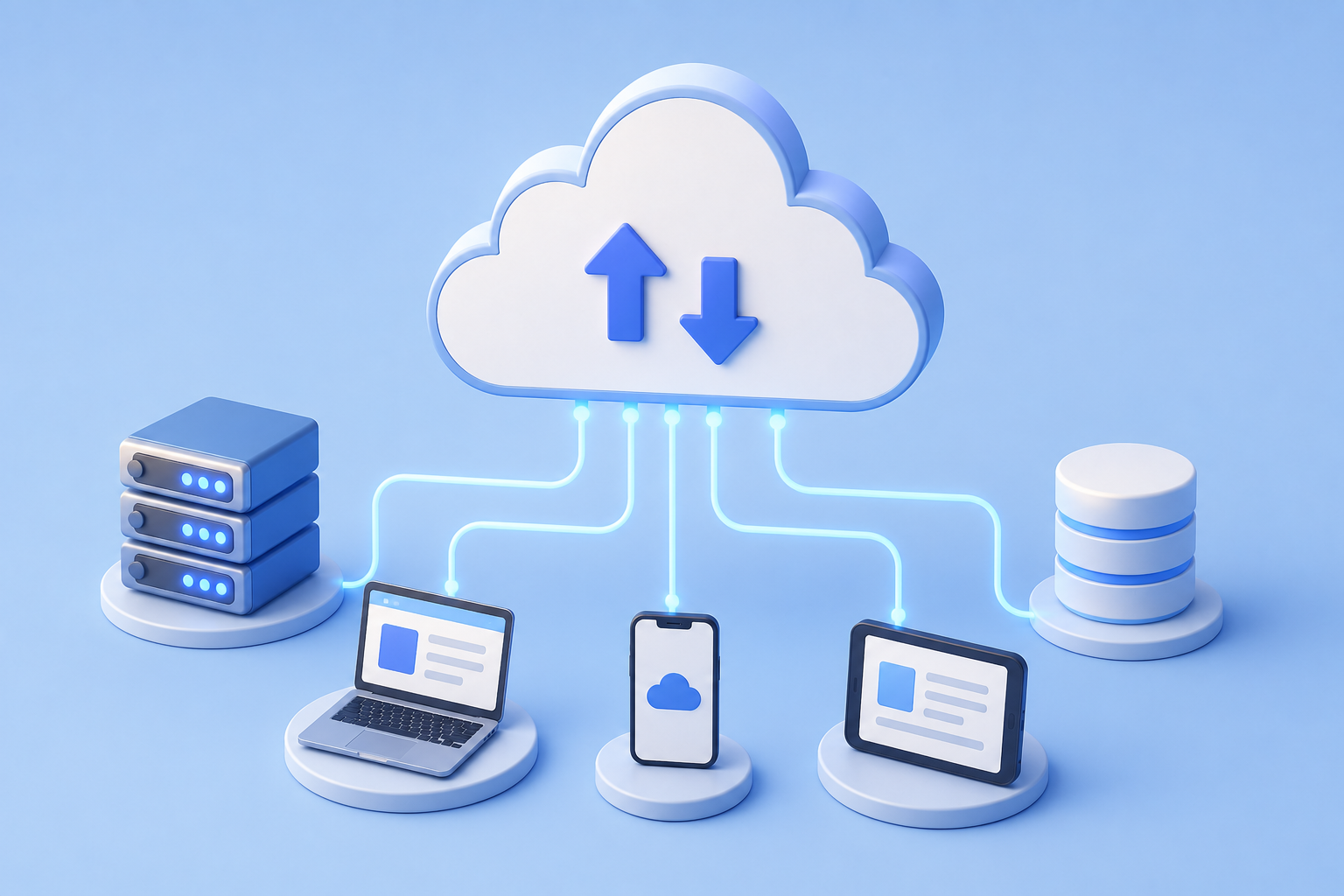
Users can access applications and resources from laptops, desktops, tablets, smartphones, or other connected devices regardless of their physical location.
Resource Pooling
Cloud providers combine vast pools of computing resources and securely share them among many customers.
Although customers use the same underlying infrastructure, virtualization and isolation technologies ensure that each organization's resources remain logically separate.
This efficient sharing helps reduce costs while maximizing hardware utilization.
Rapid Elasticity
One of cloud computing's greatest strengths is elasticity.
Organizations can quickly increase resources during periods of high demand and reduce them when demand falls.
For example, an online retailer may require significantly more computing resources during major shopping events than during a normal week.
Instead of purchasing permanent hardware for these temporary spikes, cloud platforms automatically scale resources when necessary.
Measured Service
Cloud providers continuously measure resource usage.
Organizations generally pay only for what they consume, allowing costs to align more closely with actual business activity.
This usage-based pricing model differs significantly from traditional infrastructure investments, where hardware costs were incurred regardless of utilization.
Everyday Examples of Cloud Computing
Cloud computing powers many of the digital services people use every day.
Examples include:
- Streaming video platforms
- Online file storage
- Email services
- Video conferencing applications
- Social media platforms
- Online banking
- Artificial intelligence assistants
- E-commerce websites
- Mobile application backends
- Collaborative productivity software
Although users rarely think about the underlying infrastructure, cloud computing enables these services to operate reliably for millions of users simultaneously.
Why Organizations Adopt Cloud Computing
Cloud computing offers numerous advantages over traditional infrastructure.
Scalability
Applications can grow alongside increasing customer demand without requiring major infrastructure redesign.
Flexibility
Organizations can provision resources for minutes, days, months, or years depending on their needs.
This enables experimentation and innovation without significant upfront investments.
Reliability
Major cloud providers design their infrastructure with redundancy across multiple data centers.
If one component fails, workloads can often continue operating with minimal interruption.
Cost Efficiency
Instead of making large capital investments in hardware, organizations typically pay only for the resources they use.
This reduces financial barriers for startups while allowing larger organizations to optimize infrastructure spending.
Global Reach
Cloud providers operate infrastructure in many geographic regions around the world.
Applications can often be deployed closer to users, reducing latency and improving performance.
Faster Innovation
Development teams spend less time purchasing, installing, and maintaining hardware.
Instead, they can focus on building applications, improving customer experiences, and delivering new features.
Common Misconceptions
"The cloud is just the internet."
The internet provides the connectivity used to access cloud services.
Cloud computing also includes the infrastructure, virtualization technologies, automation systems, management software, security controls, and operational processes required to deliver computing resources efficiently.
"The cloud is just someone else's computer."
While cloud providers do own the physical hardware, this description overlooks the sophisticated engineering involved.
Cloud platforms include massive distributed systems, automated provisioning, global networking, resilience mechanisms, security controls, monitoring systems, and advanced management software that allow millions of customers to share infrastructure securely and efficiently.
"Cloud computing is always cheaper."
Not necessarily.
Cloud computing often reduces costs when resources are managed effectively.
However, poorly designed architectures, unused resources, or inefficient workloads can result in unexpectedly high operational costs.
Understanding cloud architecture remains essential for controlling expenses.
Why Cloud Literacy Matters
Cloud computing has become foundational across nearly every modern industry.
Healthcare organizations securely store patient information and support medical research.
Financial institutions process billions of digital transactions every day.
Manufacturers analyze operational data from connected devices.
Governments deliver digital public services.
Universities support research and online learning.
Artificial intelligence platforms rely heavily on cloud infrastructure to train and deploy machine learning models.
As organizations continue adopting cloud technologies, cloud literacy has become an increasingly valuable skill for developers, cybersecurity professionals, IT administrators, business leaders, data professionals, and anyone working with modern technology.
Understanding the fundamentals provides a strong foundation for learning more advanced topics, including cloud security, DevOps, Kubernetes, serverless computing, distributed systems, and artificial intelligence infrastructure.
Key Takeaways
- Cloud computing delivers computing resources over a network on demand.
- Organizations rent computing services instead of purchasing and maintaining all physical infrastructure.
- Modern cloud platforms provide scalability, flexibility, reliability, and global accessibility.
- Cloud computing powers many of the digital services people use every day.
- Cloud literacy has become an essential skill across technology, business, healthcare, finance, government, and many other industries.
- Understanding cloud fundamentals prepares you for more advanced cloud technologies and architectures.
Looking Ahead
Cloud computing offers many different types of services, each designed to solve different problems.
In the next issue, we'll explore one of the most important foundational concepts in cloud computing:
Understanding Cloud Service Models: IaaS vs PaaS vs SaaS
By the end of that article, you'll understand the three primary cloud service models, how they differ, when each should be used, and why choosing the appropriate model is one of the most important architectural decisions organizations make.