June 04, 2026
Why AI Models Need Continuous Monitoring
Many people assume that once an AI model has been trained and deployed, its job is finished. The model works, the predictions look accurate, and the organization can move on. In reality, deployment is often the beginning rather than the end of the AI lifecycle. Data changes, user behavior evolves, business conditions shift, and models that once performed well can gradually become less reliable over time. In this article, you'll learn why continuous monitoring is one of the most important responsibilities in AI systems. We'll explore how AI models change after deployment, what model drift means, why evaluation metrics remain important long after training, and how organizations use monitoring to maintain trust in AI-driven decisions.
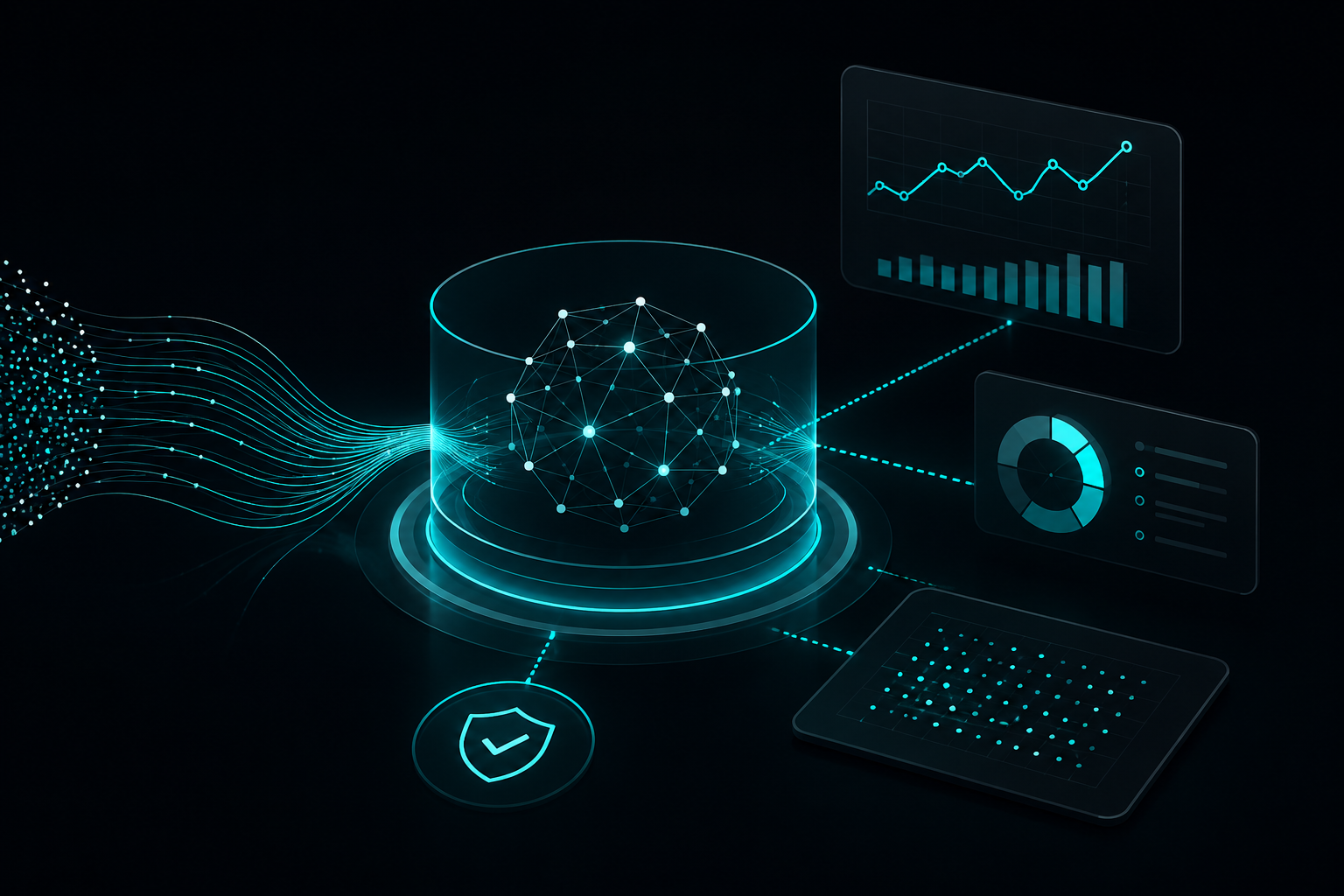
Why AI Models Need Continuous Monitoring
Introduction
One of the most common misconceptions about artificial intelligence is that models are permanent.
A company spends months collecting data. Engineers train a model. Accuracy looks strong. Testing goes well. The model is deployed.
Problem solved.
At least that’s how many people imagine the process works.
But reality is very different.
Imagine a weather forecasting system trained on historical climate patterns. Imagine a fraud detection system trained on last year’s financial transactions. Imagine a recommendation engine trained on customer behavior from six months ago.
Would those environments remain exactly the same forever?
Of course not.
People change.
Markets change.
Technology changes.
Data changes.
And when data changes, AI systems can begin making worse decisions without anyone immediately noticing.
This is why continuous monitoring has become a critical part of modern AI systems.
Monitoring helps organizations understand whether an AI model is still performing as expected after deployment. It helps identify emerging problems before they become serious issues. Most importantly, it helps maintain trust.
Understanding monitoring helps explain something many beginners find surprising:
Building the model is only part of the work.
Keeping the model reliable is an ongoing responsibility.
Why Deployment Is Not The End
At first glance, deployment feels like the finish line.
The model has been trained.
The testing results look good.
Users can now interact with the system.
Everything appears complete.
But deployment is actually the moment an AI system enters the real world.
And the real world is unpredictable.
Training data is always a snapshot of the past.
Models learn patterns from historical information.
Yet organizations make decisions in the present and future.
This creates an important challenge.
The environment that existed during training may not be the environment that exists tomorrow.
For example, an online retailer might train a recommendation model using customer behavior collected during the winter holiday season.
Months later, customer preferences may look completely different.
The model has not changed.
The customers have.
As a result, prediction quality may gradually decline.
Without monitoring, organizations may continue trusting outputs that are becoming less accurate over time.
Understanding What Monitoring Actually Means
A helpful way to think about monitoring is to compare it to a routine health check.
Doctors do not perform a single examination and then assume a patient will remain healthy forever.
Health is monitored over time.
Changes are observed.
Potential problems are identified early.
AI systems require a similar approach.
Monitoring involves continuously observing how a deployed model behaves.
Organizations typically monitor:
- prediction quality
- data quality
- system performance
- reliability
- business outcomes
- fairness indicators
- operational metrics
The goal is not simply to detect failure.
The goal is to identify small warning signs before major problems emerge.
This proactive approach helps maintain confidence in AI-driven decisions.
The Problem Of Changing Data
This is where many people become confused.
If a model was accurate during testing, why would performance suddenly decline?
The answer usually involves changing data.
Machine learning models depend heavily on patterns found in historical information.
When those patterns change, model behavior can change as well.
Consider a fraud detection model.
The system may learn to identify suspicious transactions based on known fraud techniques.
However, criminals constantly adapt.
New fraud methods emerge.
Old fraud patterns disappear.
As fraud behavior changes, the model’s understanding of suspicious activity may become outdated.
The model is still working exactly as designed.
The environment around it has changed.
This creates performance degradation that can remain hidden without monitoring.
What Is Model Drift?
One of the most important concepts in AI monitoring is model drift.
Model drift occurs when the relationship between training data and real-world data changes over time.
The model gradually becomes less aligned with reality.
Imagine a movie recommendation system.
When the model was originally trained, viewers preferred one type of content.
Months later, trends shift dramatically.
New genres become popular.
Viewer interests evolve.
The recommendation model continues making suggestions based on older patterns.
Recommendations become less relevant.
User satisfaction decreases.
This is an example of drift.
Model drift is not necessarily caused by technical failure.
It often occurs because the world itself changes.
This is why organizations continually monitor deployed systems rather than assuming performance remains constant.
Measuring Performance After Deployment
Another misconception is that evaluation ends once training is complete.
In reality, evaluation continues throughout a model’s lifecycle.
Organizations use performance metrics to determine whether a model remains effective.
Metrics help answer questions such as:
- Is accuracy declining?
- Are predictions becoming less reliable?
- Are errors increasing?
- Are users receiving lower-quality results?
This is where concepts such as Precision, Recall, F1 Score, ROC Curves, and Confusion Matrices become valuable.
These metrics provide visibility into model performance.
Without measurement, organizations may have no way to detect gradual decline.
Monitoring transforms performance from an assumption into something observable.
Why Business Impact Matters
Monitoring is not only about technical metrics.
Organizations also monitor business outcomes.
A model might appear technically healthy while still creating business problems.
Imagine an online retailer using AI recommendations.
The model continues generating recommendations successfully.
System uptime remains excellent.
Response times remain fast.
Everything looks healthy from a technical perspective.
Yet sales begin declining.
Monitoring business outcomes helps reveal whether AI systems are creating meaningful value.
A model can be operationally successful while strategically unsuccessful.
Organizations must monitor both perspectives.
Monitoring For Fairness And Trust
As AI adoption grows, organizations are increasingly concerned about fairness and responsible use.
A model that behaves fairly during testing may behave differently after deployment.
Population characteristics can change.
Data sources can change.
Usage patterns can change.
Monitoring helps identify situations where outcomes become unintentionally biased.
This is particularly important in areas such as:
- hiring
- lending
- healthcare
- insurance
- education
Trust is difficult to build and easy to lose.
Continuous monitoring helps organizations maintain confidence that systems remain aligned with their intended purpose.
The Role Of Inference In Monitoring
Understanding monitoring also requires understanding inference.
Inference is the process of using a trained model to generate predictions.
Every time a user interacts with an AI system, inference is occurring.
When a chatbot generates a response, inference is happening.
When a recommendation engine suggests a product, inference is happening.
When a fraud detection system evaluates a transaction, inference is happening.
Monitoring often focuses on inference activity because it represents real-world model usage.
Organizations track:
- prediction volume
- response times
- error rates
- resource utilization
- output quality
Monitoring inference helps ensure that deployed AI systems remain responsive, reliable, and useful.
Detecting Problems Before Users Notice
One of the greatest advantages of monitoring is early detection.
Problems rarely appear instantly.
Performance often declines gradually.
Small changes accumulate over time.
Without monitoring, organizations may not notice issues until customers complain or business outcomes suffer.
Continuous monitoring provides visibility into subtle trends.
Perhaps prediction confidence is declining.
Perhaps certain customer segments are receiving poorer recommendations.
Perhaps drift indicators are increasing slowly each month.
These signals help organizations act before major damage occurs.
The earlier a problem is identified, the easier it usually is to correct.
Monitoring In Everyday Life
Another way to view monitoring is through everyday examples.
Cars have dashboards.
Hospitals monitor patient health.
Airlines monitor aircraft systems.
Banks monitor financial transactions.
Websites monitor uptime.
Organizations monitor inventory levels.
Monitoring exists because conditions change.
AI systems are no different.
A deployed model is not a static asset.
It is an active system operating within a constantly changing environment.
Just as organizations monitor other critical systems, AI systems require ongoing observation and maintenance.
The Future Of AI Monitoring
As AI becomes more integrated into daily life, monitoring will become even more important.
Organizations increasingly depend on AI for:
- decision support
- automation
- personalization
- risk management
- customer experiences
The greater the reliance on AI, the greater the need for visibility.
Future monitoring systems will likely become more automated, more proactive, and more sophisticated.
Organizations will continue developing tools that identify drift, detect anomalies, and alert teams before performance issues become severe.
Monitoring is becoming a core component of responsible AI operations.
Key Takeaways
- Deployment is not the end of the AI lifecycle.
- Real-world environments change over time.
- Data changes can reduce model effectiveness.
- Model drift occurs when a model becomes less aligned with current conditions.
- Monitoring helps detect performance decline early.
- Evaluation metrics remain important after deployment.
- Monitoring includes technical, operational, and business indicators.
- Continuous monitoring helps maintain trust in AI systems.
Conclusion
Many people imagine AI development as a straight line.
Collect data.
Train a model.
Deploy it.
Move on.
In reality, successful AI systems require ongoing attention.
The world changes continuously, and AI systems operate within that changing environment.
Continuous monitoring provides the visibility needed to understand whether models remain accurate, reliable, useful, and trustworthy.
Perhaps the most important lesson is this:
A model does not stop learning risks simply because deployment is complete.
The responsibility shifts from building the model to understanding how it behaves in the real world.
And that understanding comes from continuous monitoring.