June 25, 2026
What Is AI Risk Management?
Artificial intelligence is helping organizations automate work, improve decision-making, analyze information, and build entirely new products and services. As AI adoption continues to grow, so does the importance of understanding AI-related risk. Like every technology, AI introduces uncertainty. A model may become less accurate over time. Sensitive information may be exposed. Bias may affect outcomes. New regulations may change organizational responsibilities. These challenges do not mean organizations should avoid AI. Instead, they highlight why AI risk management has become one of the most important components of responsible AI adoption.
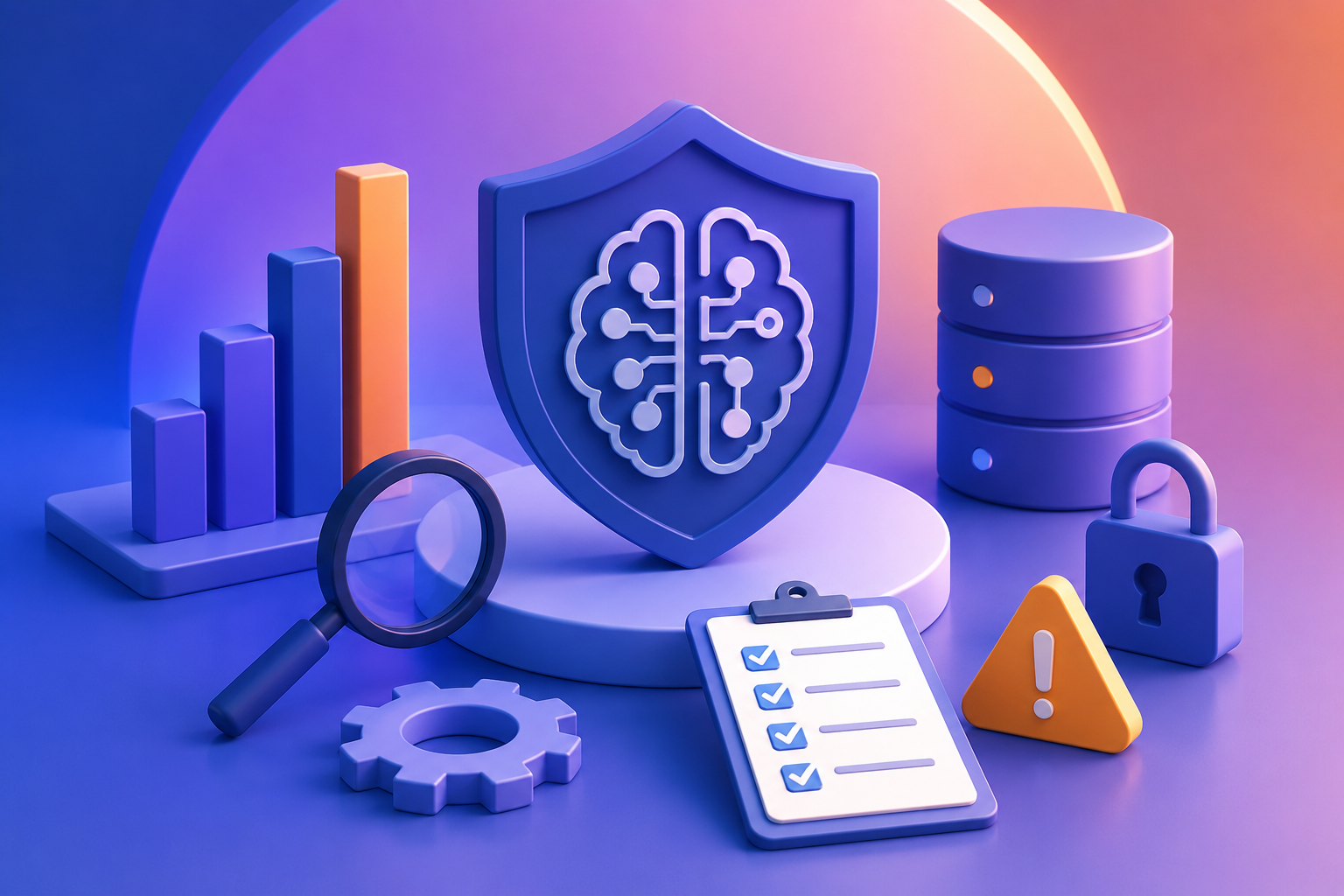
What Is AI Risk Management?
Artificial intelligence is no longer limited to research labs and technology companies.
Today, organizations across almost every industry are exploring how AI can improve productivity, reduce costs, automate repetitive work, and support better decision-making.
Businesses use AI to answer customer questions.
Hospitals use AI to assist with medical research.
Financial institutions use AI to identify fraud.
Manufacturers use AI to improve operational efficiency.
Governments are beginning to incorporate AI into public services.
The opportunities are enormous.
But every opportunity comes with responsibility.
As organizations rely more heavily on AI, they must also understand the risks that accompany these systems.
This is where AI Risk Management becomes essential.
Rather than reacting after problems occur, AI risk management helps organizations identify, assess, monitor, and reduce risks before they become significant.
Understanding AI Risk
Before discussing risk management, it helps to understand what risk actually means.
Risk is the possibility that something may prevent an organization from achieving its objectives.
That possibility may involve financial loss.
Operational disruption.
Security incidents.
Privacy concerns.
Regulatory issues.
Or reputational damage.
Artificial intelligence introduces many of these same risks while also creating new ones that organizations may not have encountered before.
The goal of AI risk management is not eliminating every possible risk.
That would be unrealistic.
Instead, the goal is understanding risks well enough to make informed decisions and implement appropriate safeguards.
Why AI Introduces New Risks
Traditional software generally behaves according to predefined instructions.
AI systems are different.
Many AI models learn patterns from data rather than following fixed rules.
Because AI systems learn from information and interact with changing environments, their behavior may evolve over time.
A model that performs well today may become less effective as new data becomes available.
This is sometimes referred to as Model Drift.
Organizations also need to think about:
- Data quality
- Security
- Privacy
- Fairness
- Transparency
- Compliance
- Reliability
- Human oversight
These factors make AI governance more complex than traditional software governance.
The AI Risk Management Process
Although every organization approaches risk management differently, most follow a similar process.
The first step is identifying potential risks.
Organizations ask questions such as:
- What could go wrong?
- Who could be affected?
- How likely is this risk?
- What would the impact be?
Once risks are identified, they are evaluated.
Some risks may have little impact.
Others may require immediate attention.
Organizations then implement controls designed to reduce those risks.
These controls might include governance policies, security measures, testing procedures, documentation requirements, or human review.
Finally, risks continue to be monitored.
AI systems are rarely static.
They evolve over time, making continuous monitoring an important part of effective risk management.
Examples Of AI Risks
AI risk management covers many different types of risk.
One category involves security.
Organizations must protect AI systems from unauthorized access, Prompt Injection, Model Theft, and other attacks.
Another category involves privacy.
AI systems often process sensitive information, making AI Privacy an important consideration.
Operational risks also exist.
An AI model may produce inaccurate recommendations.
Performance may decline.
Unexpected outputs may affect business decisions.
Organizations also consider ethical risks.
Bias within training data may influence model outputs.
Lack of transparency may reduce trust.
Insufficient human oversight may lead to poor decisions.
Effective AI risk management considers all of these areas rather than focusing on only one.
AI Risk Management And AI Governance
People sometimes confuse AI Risk Management with AI Governance.
The two concepts are closely related but not identical.
AI governance defines how an organization oversees AI.
It includes policies, roles, responsibilities, accountability, and decision-making structures.
AI risk management focuses specifically on identifying, evaluating, and reducing AI-related risks.
A helpful way to think about the relationship is driving a car.
Governance establishes the traffic rules.
Risk management helps drivers avoid accidents while following those rules.
Organizations benefit from both.
Strong governance supports effective risk management.
Strong risk management strengthens governance.
The Importance Of Continuous Monitoring
Managing AI risk is not a one-time activity.
An AI system that performs well today may behave differently six months from now.
New regulations may appear.
Business requirements may change.
Attack techniques may evolve.
Training data may become outdated.
Because AI environments change continuously, organizations increasingly rely on ongoing monitoring.
Monitoring helps detect performance changes, security issues, compliance concerns, and operational risks before they become significant.
Rather than waiting for problems to occur, organizations can respond proactively.
Who Is Responsible?
AI risk management is rarely the responsibility of one person.
Successful organizations often involve multiple teams.
Business leaders establish objectives.
Developers build AI systems.
Security professionals protect infrastructure.
Compliance teams interpret regulations.
Auditors evaluate controls.
Governance teams oversee responsible AI practices.
This collaborative approach helps ensure risks are considered from multiple perspectives.
As AI adoption grows, cross-functional collaboration is becoming increasingly important.
Why AI Risk Management Builds Trust
Organizations adopt AI because they want better outcomes.
Greater efficiency.
Improved customer experiences.
Faster decision-making.
New capabilities.
However, those benefits depend on trust.
Employees need confidence in AI systems.
Customers need confidence that their information is protected.
Regulators expect organizations to manage AI responsibly.
Risk management helps build that confidence.
It demonstrates that organizations understand potential challenges and are taking practical steps to reduce them.
In many cases, effective risk management enables innovation rather than slowing it.
Why AI Literacy Matters
AI risk management is no longer only for security professionals or auditors.
Managers increasingly oversee AI-enabled projects.
Employees interact with AI systems every day.
Executives make decisions about AI investments.
Understanding AI risk helps people ask better questions, recognize potential issues, and participate more effectively in AI adoption.
It is becoming an important part of AI literacy.
The more people understand AI risks, the better equipped they are to use AI responsibly.
Key Takeaways
- AI risk management focuses on identifying, assessing, monitoring, and reducing AI-related risks.
- AI introduces operational, security, privacy, compliance, and ethical considerations.
- Risk management supports responsible AI adoption rather than preventing innovation.
- Continuous monitoring is essential because AI systems change over time.
- AI governance and AI risk management work together but serve different purposes.
- Managing AI risk requires collaboration across multiple teams.
- Strong AI risk management helps build trust in AI systems.
Conclusion
Artificial intelligence is creating new opportunities across every industry.
Organizations that understand both the benefits and the risks will be better positioned for long-term success.
AI risk management provides a structured approach to identifying potential issues before they become larger problems.
Rather than viewing risk as something to fear, organizations can view it as something to understand, monitor, and manage.
As AI continues becoming part of everyday business operations, AI risk management will become one of the most important foundations of responsible AI adoption.